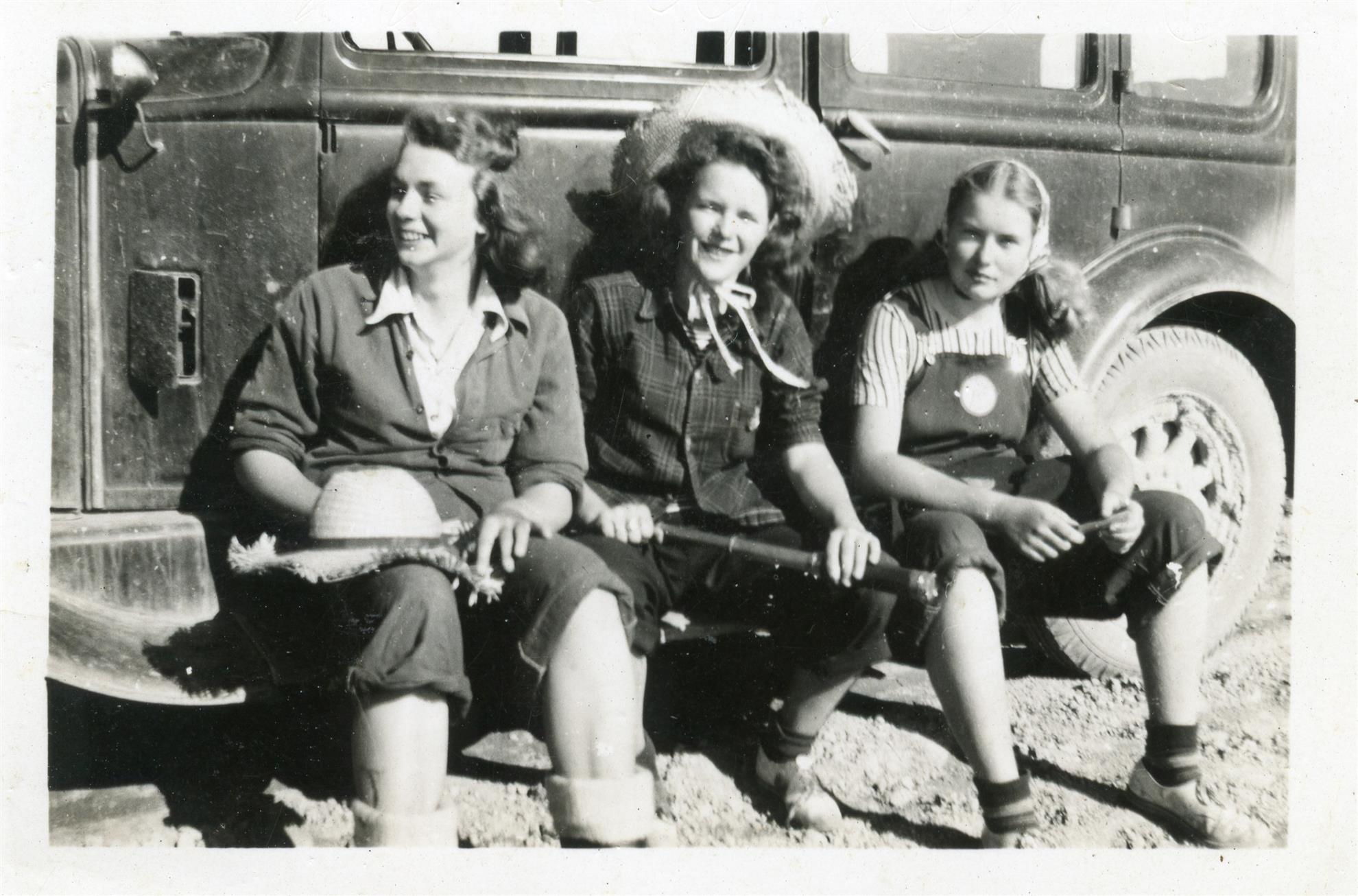
[Featured photo: The image of three young Farmerettes that helped launch years of research and recognition into this remarkable chapter of Canadian history.]
Members of the Rotary Club of St. Marys were honoured to welcome Bonnie Sitter for a fascinating and heartfelt presentation on the story of Canada’s Farmerettes—the thousands of young women who helped sustain food production during the Second World War.
Bonnie explained that the identities of the three young women in the featured photo remain uncertain, yet this image became the spark for an extraordinary journey of historical discovery. From that single photograph came years of research that eventually led to articles, a book, a play, a documentary, a commemorative stamp, and growing public recognition of the Farmerettes’ contribution to Canada.
If anyone recognizes one or more of the young women in the photograph, Bonnie would be delighted to hear from them.
Bonnie has spent many years researching, documenting, and preserving the history of the Farmerettes, officially known as the Ontario Farm Service Force. Created in 1941, the program responded to a growing labour shortage as many men left farms and communities to serve in the military. Young women between the ages of 16 and 18 were recruited from schools across Ontario and encouraged to volunteer for summer farm work.
More than 40,000 young women are estimated to have served in the program over its 11-year history. These teenagers travelled far from home—many for the first time—to camps and farms throughout Ontario, particularly in fruit and vegetable growing regions such as Niagara, Essex, Lambton, and other agricultural communities.
Their work was physically demanding. Farmerettes harvested strawberries, peaches, cherries, tomatoes, onions, asparagus, celery, cucumbers, and many other crops. They packed produce, worked in canning factories, drove farm vehicles, and performed whatever jobs were needed to keep farms productive during wartime.
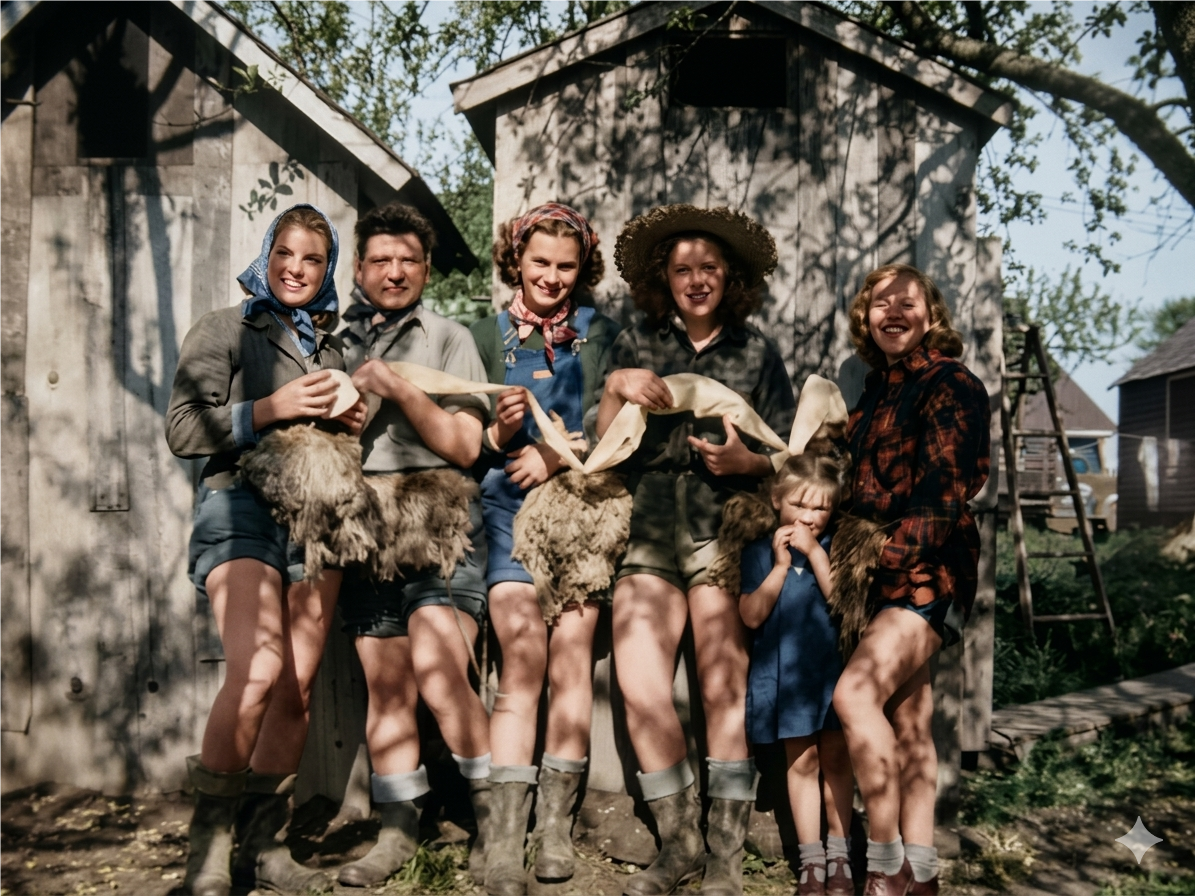
Through an extraordinary collection of historic photographs and personal accounts, Bonnie shared the resilience, humour, and spirit of the young women who took part. While the work was difficult, many participants remembered their summers with pride and affection, often describing the experience as life-changing. Lifelong friendships were formed, and many women carried those memories with them for decades.
Her dedication to preserving this history also led to the creation of the award-winning documentary We Lend a Hand: The Forgotten Story of Ontario Farmerettes, helping bring the Farmerettes’ story to new audiences across the country.
Bonnie noted that the twenty Farmerettes interviewed for the documentary were mostly in their nineties, with many reaching 100 years of age. She shared that they were able to see the film completed and hear their own stories preserved for future generations.

Bonnie also highlighted the recent Canada Post commemorative stamp honouring the Farmerettes, another meaningful sign of the growing recognition these women have earned for their wartime service.
Members were especially interested to learn of local connections, including women from St. Marys and surrounding communities who participated in the program.
As part of Rotary tradition, Bonnie was thanked with the donation of a book to the St. Marys Public Library in her honour.
The Rotary Club of St. Marys sincerely thanks Bonnie Sitter for an engaging presentation that celebrated service, perseverance, and an important piece of Canadian history.
All photographs used in this story were supplied by Bonnie Sitter and are used with her permission.
welendahand.ca | Farmerettes Forever on Facebook | bonnie.sitter@gmail.com